Belt Selection Technical Guide
Professional Selection · Material Analysis · Installation Standards · Selection Recommendations
I. Traction Force: The Core Performance Metric of Belt Conveying
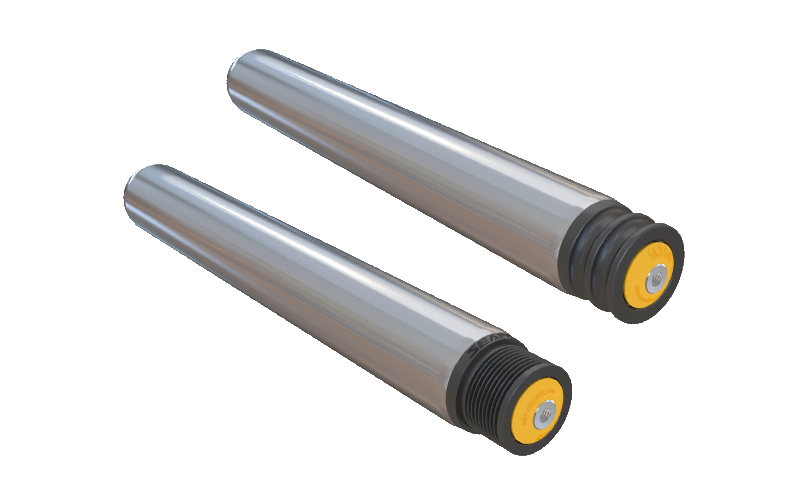
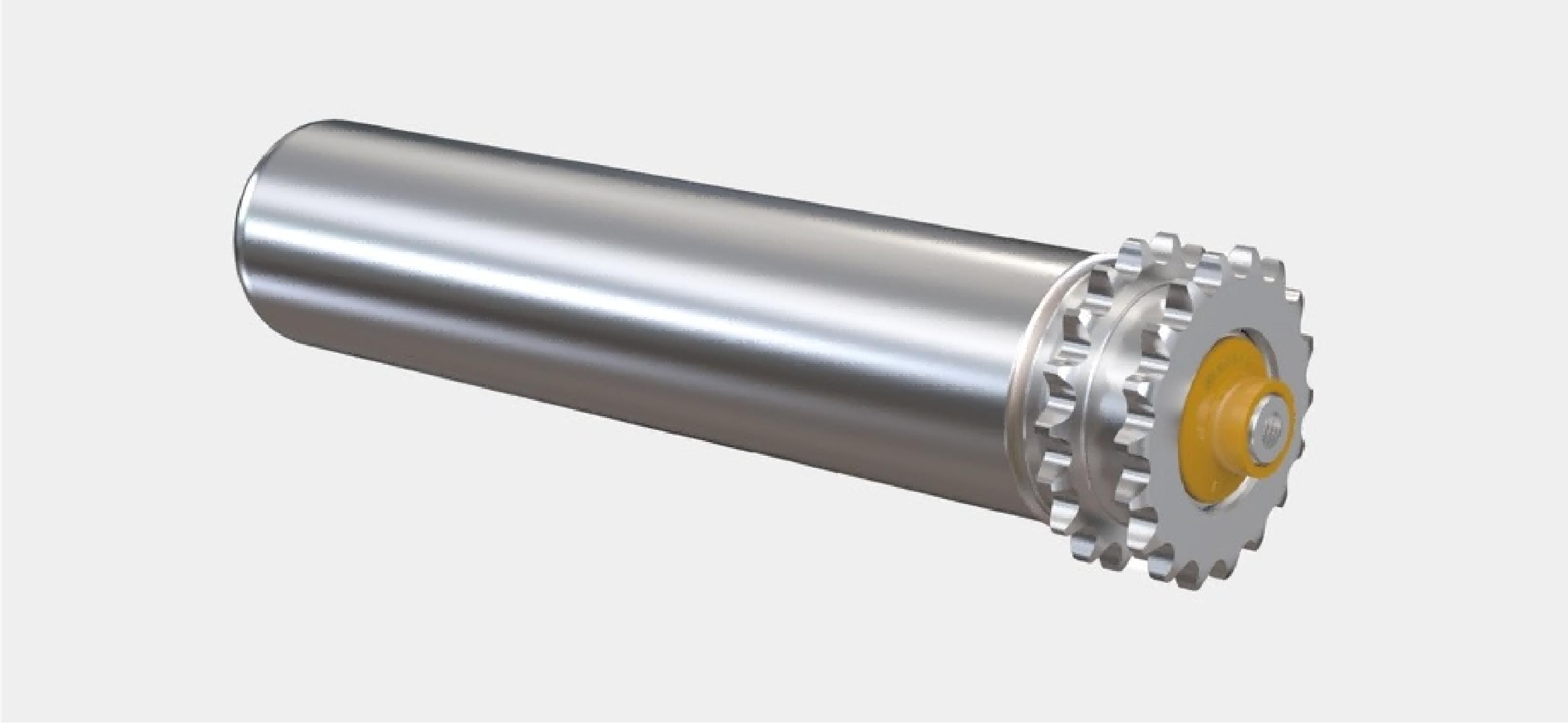
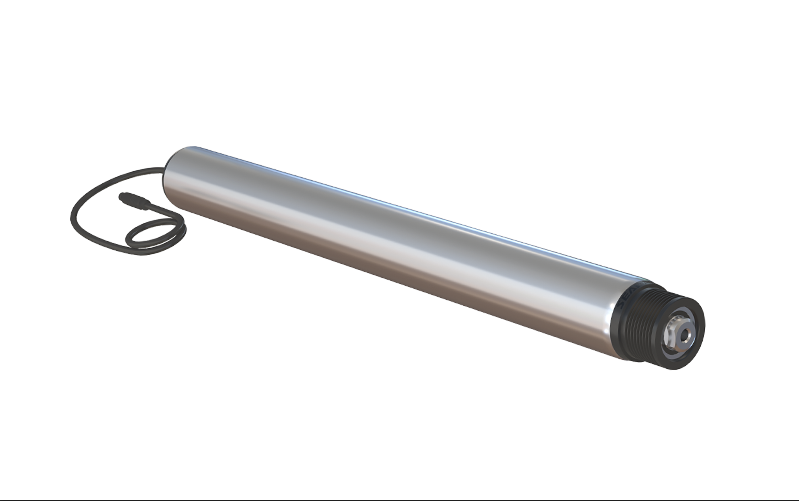
In the belt selection process, a common misconception exists that "thickness determines durability." In reality, the ability of a belt to stably carry and convey materials is fundamentally determined by the traction force between the belt and the rollers. This characteristic shares a similar physical mechanism with tire grip principles — when a belt operates on the roller surface, insufficient friction will cause slippage, directly resulting in reduced conveying efficiency or even material stagnation.
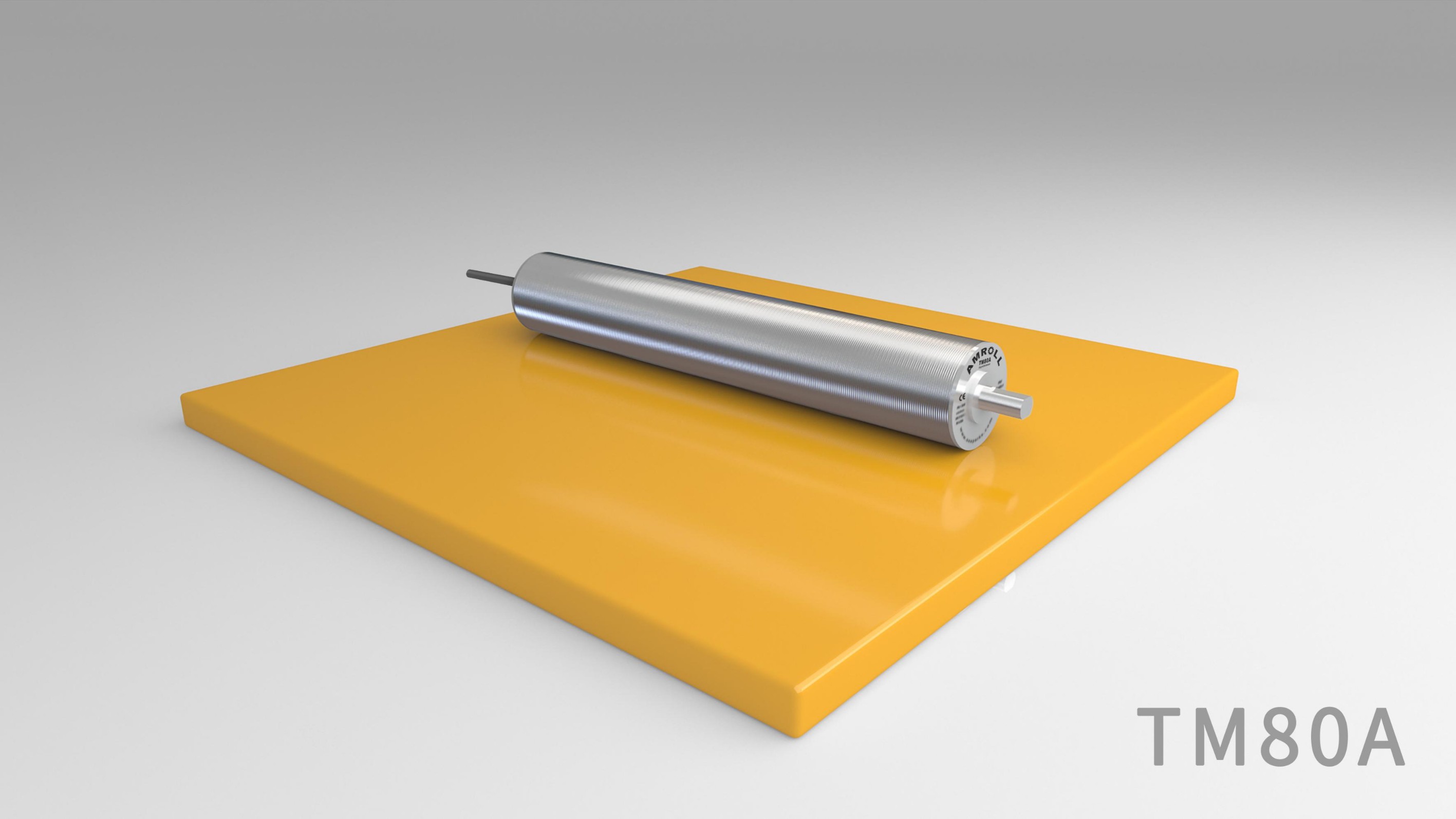
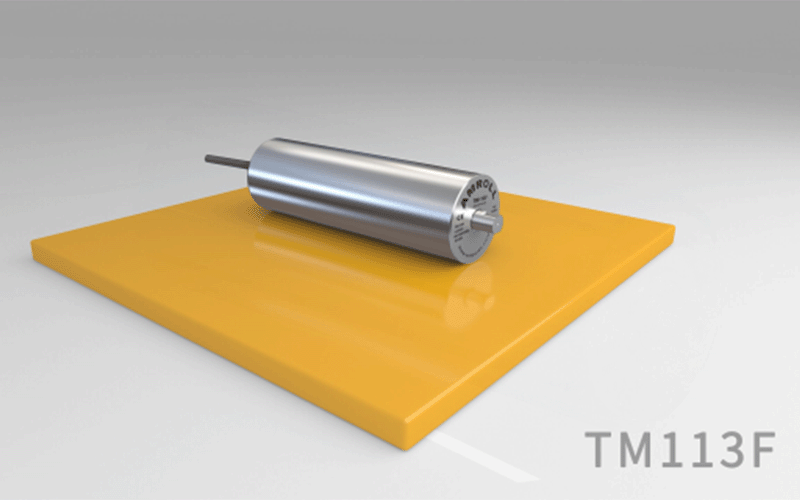
Important Notice: When the system utilizes small-diameter rollers such as 80mm or 113mm, and the conveying length exceeds 1 meter, belt selection requires specialized assessment. Small-diameter rollers exhibit operational characteristics of higher rotational speed and limited contact area with the belt, imposing significantly higher requirements on belt conformity. Under such operating conditions, insufficient belt flexibility or improper tension configuration can easily lead to roller idling, directly affecting production continuity.
II. Material Comparison and Application Scenarios
1. PVC Belt — Heavy-Duty Straight Conveying Solution
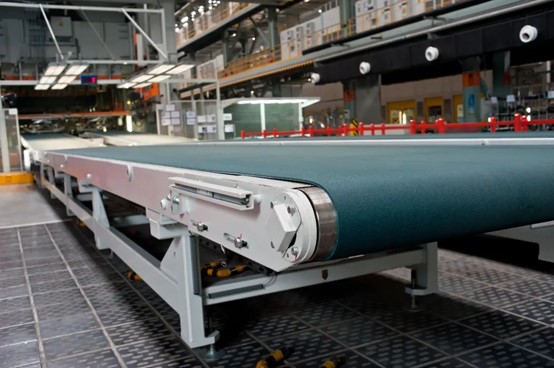
PVC belts are manufactured using a calendering composite process with polyester fabric and PVC, which imparts excellent longitudinal stability. In straight conveying applications, PVC belts maintain a stable running trajectory and offer good turning adaptability. In heavy industries such as mining and construction materials, where conveying heavy loads like gravel and cement is required, PVC belts — with their wear resistance and anti-tear properties — achieve long-term stable operation, making them the ideal choice for heavy-duty straight conveying scenarios.
2. PVK Belt — Flexible Conveying Solution
PVK belts are produced through a woven fabric impregnation process, offering superior flexibility compared to PVC belts. When conveying electronic components, food products, and other materials requiring surface protection, PVK belts provide a gentler conveying interface, effectively preventing surface damage to materials. It should be noted that PVK belts are slightly inferior to PVC belts in longitudinal stability and turning radius adaptability. Therefore, PVK belts offer greater advantages in frequent turning or high-flexibility conveying scenarios, while PVC belts remain the preferred choice for straight heavy-load conveying tasks.
3. PU & Rubber Belts — Specialized Solutions for Specific Applications
PU belts feature non-toxic and odorless material properties, making them widely used in food, pharmaceutical, and other industries with stringent hygiene standards, effectively preventing contamination of conveyed materials. Rubber belts excel in elasticity and wear resistance, making them suitable for conveying highly abrasive materials such as coal and ore, significantly extending belt service life and reducing maintenance frequency.
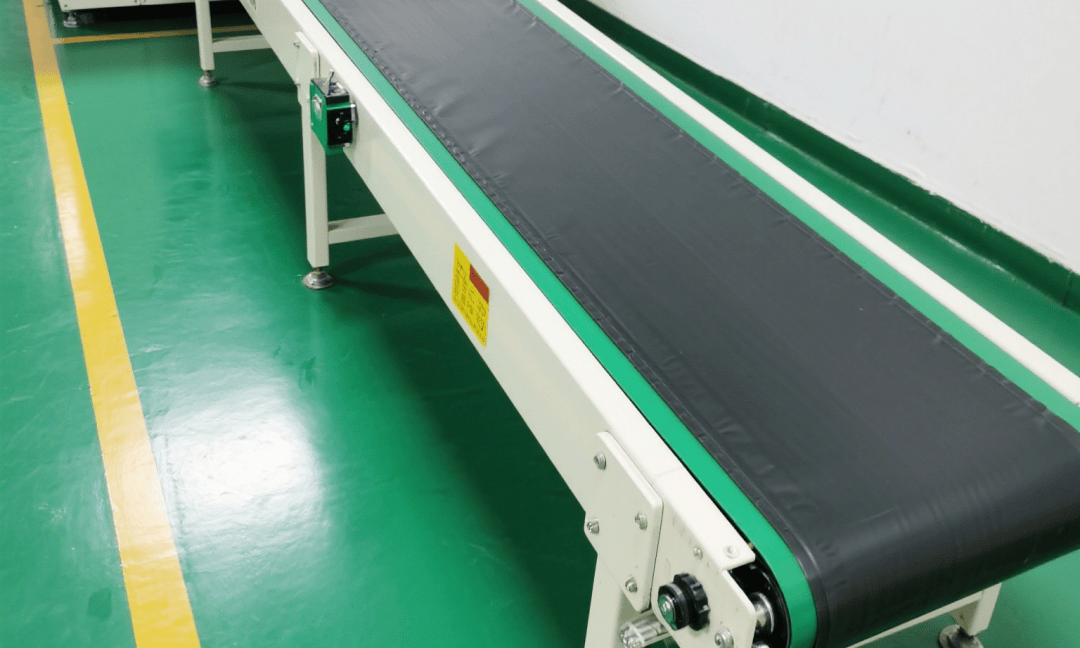
III. Belt Tension Adjustment Standards
Proper belt tension configuration is a critical factor in ensuring normal equipment operation. Insufficient tension will cause belt slippage, reducing conveying efficiency, while excessive tension increases roller load and accelerates equipment wear. The scientific tensioning principle is to maintain uniform tension distribution across the belt.
If belt tension is unevenly distributed, tracking deviation will occur during operation, which not only accelerates localized belt wear but also imposes additional loads on roller bearings and other transmission components. In practice, some operators over-tension belts to avoid slippage risks; however, this approach causes rollers to bear excessive load before reaching rated capacity, severely compromising equipment service life.
Adjustment Standard: After installation, apply manual pressure to create a 1–2cm deflection in the belt, then use a professional tension gauge to calibrate the tension across the entire belt length, ensuring uniform tension that meets equipment operating standards.
IV. Support Solutions for Long-Distance Conveying
When the conveying length exceeds 2 meters, the belt is subject to the combined effects of its own weight and load, causing sagging in the middle section. This not only increases running resistance but also accelerates belt wear. For such operating conditions, it is recommended to install a center support roller at the midpoint of the backing plate, adjusting its height to approximately 2mm above the horizontal plane. This effectively supports the belt's running span, controlling belt sag within a reasonable range and ensuring conveying stability.
V. Selection Precautions
Avoid Low-Price Risks: Low-cost belt products often exhibit deficiencies in key performance indicators such as wear resistance and anti-tear properties. They frequently develop cracking and slippage issues within a short period, ultimately increasing the total cost of ownership. It is recommended to select certified brand-name products to ensure reliable belt performance and stable operation.
Pay Attention to Operating Parameters: Roller diameter and conveying length are the core parameters influencing belt selection. Under combined operating conditions of small-diameter rollers and long-distance conveying, priority should be given to belt products with high friction and high flexibility to meet actual operational requirements.
Standardize Tensioning Operations: Relying solely on experience to judge belt tightness involves significant error. It is recommended to use a professional tension gauge for precise measurement, ensuring that the tension meets equipment operating requirements and extending the service life of belts and transmission components.
| Material Type | Core Properties | Application Scenarios | Recommended Use Case |
|---|---|---|---|
| PVC | Longitudinal stability, wear-resistant, anti-tear | Mining, construction materials, heavy industry | Heavy-duty straight conveying |
| PVK | High flexibility, gentle surface | Electronic components, food, etc. | Curved / flexible conveying |
| PU | Non-toxic, odorless, hygienic | Food, pharmaceutical industries | High-hygiene-standard applications |
| Rubber | Excellent elasticity, high wear resistance | Coal, ore, and other abrasive materials | High-wear conveying |